
Welcome to ScapeCrunch
We are ScapeCrunch, the place where planted aquarium hobbyists come to build relationships and support each other. When you're tired of doom scrolling, you've found your home here.
Social Feed

Staff member
I Donated 2026
Founding Member
Why should we care about what's happening in the planted aquarium substrate?
I think most of us intuitively know that the substrate microbiome is one of the least studied topics in the planted tank hobby. Many find it irrelevant as it seems to not be a determining factor for creating a healthy and vibrant aquarium. Others accept that a substrate microbiome develops over time in the aquarium and may contribute to the health of the plants. Again, a shrug of shoulders because, unlike adding CO2, it doesn't seem to make much of a difference.
While I understand the above points, I believe that some hobbyists enjoy the science associated with our hobby and want to push forward our understanding of the living ecosystem we love to create. It's not an inanimate piece of art or a piece of furniture, we are all creating an environment for many forms of life and that responsibility requires that we try to understand and improve our knowledge of how to create the best environment we can.
At the moment, we have little to know understanding of the relationship that the microbiome that develops in our substrates has with aquarium plants. We do know that this relationship has existed for eons and our only now learning how extensive it is. Could a plant that mysteriously isn't doing well in your tank be missing something like this? Could a healthy microbiome lead to stronger, healthier plants that better show color, fight of algae and grow?
Take a listen to this Ted Talk when you have a little time. It's on the relationship of mycorrhizal fungi and trees but try to think about how it would apply to our planted aquariums.
I previously linked a resource related to a study finding mycorrhizae in aquatic environments too. Here is another one talking about Lobelia and mycorrhizae.
Businesses have been and are expanding their focus on the substrate microbiome
 Aqua Design Amano has for years been selling Bacter 100. According to them:
Anecdotally, I built a few ADA only aquariums in the past. I have yet to have an easier time with any of my other tanks. The ADA tanks that contained Bacter 100 and the other products, just ran and grew better.
Snake oil? Is my experience, simply my experience and can be attributed to many things?
I think in today's science, we know that monocultures of bacteria are bad so more bacterial species in harmony is better. We also know that bacteria and other microorganisms do a lot more in symbiosis than we first thought. We are learning this even about our own gut biome. Why do you think this wouldn't apply to our planted aquarium environments?

Even CaribSea, a company that focuses on substrates, has quietly gotten into this with their product, Flora-Spore. I've reached out to them to get some background on this product but, alas, my requests have gone unanswered.
According to their product labeling:
I suspect that this product is similar to the TNC MycorrHydro produced for the hydroponics industry. Now I'm sure it's not the same but I think the intended purpose is similar. TNC says is also has hormones:
Is there an easy way to get some of the benefits without commercial products?
Think about this. What if I went over to @GreggZ's house and he was kind enough to share one cup of his substrate to me? I then came home and added that cup to my substrate. I've just taken a good sample of Gregg's microbiome and added it to mine simply adding to the diversity. However, as Gregg's tank is clearly successful, I'm willing to be that the microbiome that has developed in his tank is one that works well for our purposes. Why not "bottle the magic!"?Of course, this doesn't mean my tank will now be like Gregg's. This isn't DNA cloning. However, it does certainly function like me taking some probiotics. I'm adding bacteria, fungi, etc. that are beneficial.
Let's extend this. Why wouldn't Marian Sterian or Dennis Wong not package up cups of their successful tank substrates and sell it to others? Wouldn't the same apply?
5 Replies
·
2130 views


Rockstar
I know stainless isn't 100% impervious to rust, but I try to let my tools dry out after use and mine have a bit of rust.
I'm frustrated because.... you know.... we all want pretty tools.
I thought I had quality stuff, but now I'm not sure, or I didn't let them dry good a few times.
Do yours rust or do I have tools?
I'm frustrated because.... you know.... we all want pretty tools.
I thought I had quality stuff, but now I'm not sure, or I didn't let them dry good a few times.
Do yours rust or do I have
tools?
1 Replies
·
11 views

I Donated 2026
Curious as to what everyone is using for drop checker solution?
A premixed commercial solution? If so, are they all pretty much the same as each other or are some better than others?
Do you DIY a 4dkh solution and add bromothymol blue? If so what is your recipe?
Do you DIY your own but make it to a different dkh? I know some people go higher than 4 so the lime green is 40+ppm of CO2.
I am out of my DIY 4dkh solution that was made up so long ago I can’t remember when. Rather than just making more I thought I would see what others are doing.
Has anyone used a 2 drop checker system? I am thinking I may run a low dkh checker so it turns full yellow at 30ppm to give a floor reading and a higher dkh solution that turns green at 45ppm.
A premixed commercial solution? If so, are they all pretty much the same as each other or are some better than others?
Do you DIY a 4dkh solution and add bromothymol blue? If so what is your recipe?
Do you DIY your own but make it to a different dkh? I know some people go higher than 4 so the lime green is 40+ppm of CO2.
I am out of my DIY 4dkh solution that was made up so long ago I can’t remember when. Rather than just making more I thought I would see what others are doing.
Has anyone used a 2 drop checker system? I am thinking I may run a low dkh checker so it turns full yellow at 30ppm to give a floor reading and a higher dkh solution that turns green at 45ppm.
What drop checker solution do you use?
12 votes total
5 Replies
·
112 views
Rockstar
As I look at the topcis in the algae forum, it seems a lot of us battle this one.
1. Manual removal has mine back to minimal mostly in the crowns of a few plants and some spots on the substrate. I have an air stone running at night. It smells funky when I get close to the tank. I am taking it as a sign the emycin is working. What thinks you?
2. Something I read on using emycin said you must dose it at night. I think I saw it only in one place. Any ideas why someone might think that was the case? To me, antibiotics are going to work best when the algae is growing and active. That's how they work is by disrupting some process in the life cycle. My cyano contracts and almost disappears when the lights are off. Not a sign it is metabolically active. Am I missing something or is this just someone's questionable opinion?
3. I've increase aeration. I have lots of flow. I've manually removed most of it. I'm adding emycin. I try to keep my NO3 around 15. I'm going to test it before my weekly water change to make sure it isn't bottoming out, but for weeks, it's been fine. Is my NO3 high enough? Anything I'm missing?
1. Manual removal has mine back to minimal mostly in the crowns of a few plants and some spots on the substrate. I have an air stone running at night. It smells funky when I get close to the tank. I am taking it as a sign the emycin is working. What thinks you?
2. Something I read on using emycin said you must dose it at night. I think I saw it only in one place. Any ideas why someone might think that was the case? To me, antibiotics are going to work best when the algae is growing and active. That's how they work is by disrupting some process in the life cycle. My cyano contracts and almost disappears when the lights are off. Not a sign it is metabolically active. Am I missing something or is this just someone's questionable opinion?
3. I've increase aeration. I have lots of flow. I've manually removed most of it. I'm adding emycin. I try to keep my NO3 around 15. I'm going to test it before my weekly water change to make sure it isn't bottoming out, but for weeks, it's been fine. Is my NO3 high enough? Anything I'm missing?
6 Replies
·
31 views

Journal Farmer D. Singh's journal
Ive reorganized the order of my tanks so I can better keep track of them ie. Tank 2 moss tank is now tank 3. This helps in any confusion I had when tracking tanks they are in a sort of order now. Rather than taking time editing my old journal id rather create a new thread. Pics will be current (for the most part) as they are posted. I am not aquascaping. I am just farming.
26 Replies
·
1120 views

I Donated 2026
Expert in Residence
MOTM Winner
I have good nutrient, CO2 and light levels, why do my plants still grow poorly
Many hobbyists spend time perfecting tank parameters, nutrient, light and CO2 levels, thinking that this automatically translates into optimal plant growth. While these factors are important, there are many other factors that affect plant growth.
For example above we have two groups of Lysimachia parvifolia growing side by side. Both groups have access to the same parameters, CO2, light, nutrients, substrate. However, the group on the right is growing poorly with darker, melting leaves and the group on the left is growing super vibrant red, with hardly a blemish.
This is not due to some arcane reason such as water flow hitting one group but not the other. The reason here is much simpler - the group on the right has been trimmed back repeatedly and allowed to grow in the same spot for a few months, while the group on the left was uprooted in the last month, divided and replanted. Overcrowding, both above and below the substrate, resulted in poorer quality new leaves being produced for the group of the right. This poor growth happened despite great growth parameters, a ton of CO2 and nutrients in the water column etc.
Different plants have different tolerances for overcrowding and aging. Some plant species regenerate well from repeated trimming cycles, others need replanting more frequently. Having great growth conditions delay deterioration of old growth, but most plants grow more optimally with regular replanting to clear congested rootzones and old growth.
Trimming and replanting cycles
The exact number of trimming cycles each species can regenerate from, and the time it takes for old growth and root zone congestion to take effect is different for each aquarium environment. Generally, if aquarium conditions are more spacious, and there is more substrate depth and stable growth conditions, plants can grow in one spot longer. Stressful growth conditions, poor nutrient/CO2 levels and even poor microbial balance accelerate deterioration of old growth.Interestingly, on the opposite end, overcrowding and root zone congestion also happens more quickly in fast growth aquariums. Hobbyists that throw a ton of nutrients and CO2 at their plants run headfirst into the brick wall that is overcrowding. This can be countered somewhat by using a portion of slower growing plants in an aquarium. The slower growing plants can be worked less often, while the fast growers are on a more regular replanting cycle.
Many aquascapers avoid stem plants because they require much more frequent replanting to grow well. Species such as Anubias, Bucephalandra and Cryptocoryne species on the other hand, have extremely long replanting cycles, and can grow for years without needing to be uprooted.

In this stem plant heavy aquascape that is around 7 months old, every single plant cluster has been replanted at least once. A sample of the replanting cycle for each species:
- Rotala blood red SG - every 4 months
- Rotala macrandra mini type 4 - every month
- Lysimachia parvifolia - every 2-3 months
- Xyris difformis - every 5-6 months
- Elatine triandra - every month
- Rotala florida - every 3-4 months
- Staurogyne purple - every 5 months

Uprooting, cleaning, replanting:

To refresh stem plant bushes, we will replant the fresh tops of the plants, while discarding the older bottom portions.
The first step is to uproot the entire stem plant bush. To control the mess when pulling up the soil, we recommend using a water siphon to vacuum the area when pulling up plants. The siphon should be held very close to the point where the plant is being pulled up to catch the soil debris.
We will try to remove as much of the old root system as possible and also remove any organic debris that has accumulated in the area. While organic debris contributes small amounts of nutrients through decomposition, a build-up of organic debris will interfere with root formation for more delicate plants and will also trigger algae. To stir up the organic debris, we use a turkey baster to spray jets of water onto the substrate while vacuuming with a siphon. The aquasoil should look clean before we start replanting.

The next step is to sort the uprooted stems and select only the healthiest heads for replanting. (A) is a middle portion and already has several branches. It is a poor choice as it will give rise to very uneven growth. (B) is a weak cutting- observe how thin the stem is, and the lack of colour. If replanted, it has a lower chance of success. (C) is ideal. A thick, singular healthy top with healthy new leaves.

Enriching the substrate with new aquasoil
When plants are uprooted, we can take the chance to enrich the substrate. There are two main ways to replenish depleted aqua soils. The first is to use nitrogen-rich root tabs. The second is to add fresh ammonia-rich aquasoil periodically. A good rate is adding 1% of new ammonia-rich aquasoil per month. For example, if you have 30kg of aquasoil in an aquarium, adding around 300 grams per month will work well. You can add new aquasoil during plant replanting cycles. Simply remove a portion of old aquasoil with a water siphon or spoon, then add and mix in the new aquasoil. This method may be cheaper than using root tabs in the long run

Replanting entire planted aquariums regularly is not feasible for most aquarists. So having an aquascape consisting solely of fast growing stem plants can be a nightmare when overcrowding and age sets in. Aquarists should plant a mix of slower growing species and species that do not need frequent trimming/replanting. Then the fast growing bunches can be replanted on a rotation basis - only one species is replanted during each weekly water change for example.Replanting work requires skill and dexterity. It is often difficult for beginners to manage, until some experience is gained. It becomes much easier with practice and time.
In this aquarium, Rotala florida, Xyris difformis, Syngonanthus species are all plants that can grow for months without replanting.

With consistent maintenance, aqua soils do not need to be replaced. The aqua soil in this aquarium is 1.5 years old APT Feast. Regular enrichment and clearing of detritus allows the substrate to perform like new. By renewing plant growth continually through replanting, and enrichment, planted aquariums also become more algae resistant.
This article is a slightly condensed version as I know folks don't like to be redirected, the full article can be found here:
Good parameters, Good CO2, Good light, Poor plant growth?
17 Replies
·
327 views


Journal High-Tech 90P Build
Hi guys!
I'm new here, but not entirely new to planted tanks though I've been out of the hobby for the better part of the last decade between kids and moving a couple of times - but finally in a spot where I can do something again. I'm mostly going to be making things up as I go along, but plan on a lot of automation (I want to integrate everything into home assistant) and a lot of DIY as I love the challenge of building things out myself.
The starting point:
I picked up a 90P rimless, low-iron tank on a great deal.
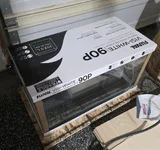
I have a rough idea in my head for a stand to be built from plywood - just have a couple other house projects to finish off before starting that built.
Wife says I can only have one aquarium, so for this tank, I want to go all out with a sump to allow for auto top off, and auto water changes, auto fertilizer dosing etc. etc. I have half a plan in my mind.
I've also started on the light fixture which I've modeled up in CAD, and plan on making out of an 8020 extrusion, and some 3D printed bits.

I'm using bridgelux gen 3 thrive CW (3000k) and WW (5000k) LED strips which have super high CRI at 98+ along with some specific XPE2 wavelengths that I'll solder onto some starboards. Far Red (730nm), Red (654nm), Cyan (495nm), Blue (455nm), Visible UV (415nm). Each segment of the white channels will be on its own driver so I can adjust left to right brightness in thirds, and each colour channel on its own driver so I can vary each channel on a time-based approach.
These will be run from a custom PCB board with Meanwell N-LDD drivers, and will run ESPHome on an ESP32 so it can link up with my Home Assistant installation.
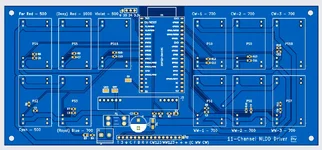
That's it for now, this will probably be a very slow build so be warned if you follow along!
I'm new here, but not entirely new to planted tanks though I've been out of the hobby for the better part of the last decade between kids and moving a couple of times - but finally in a spot where I can do something again. I'm mostly going to be making things up as I go along, but plan on a lot of automation (I want to integrate everything into home assistant) and a lot of DIY as I love the challenge of building things out myself.
The starting point:
I picked up a 90P rimless, low-iron tank on a great deal.
I have a rough idea in my head for a stand to be built from plywood - just have a couple other house projects to finish off before starting that built.
Wife says I can only have one aquarium, so for this tank, I want to go all out with a sump to allow for auto top off, and auto water changes, auto fertilizer dosing etc. etc. I have half a plan in my mind.
I've also started on the light fixture which I've modeled up in CAD, and plan on making out of an 8020 extrusion, and some 3D printed bits.
I'm using bridgelux gen 3 thrive CW (3000k) and WW (5000k) LED strips which have super high CRI at 98+ along with some specific XPE2 wavelengths that I'll solder onto some starboards. Far Red (730nm), Red (654nm), Cyan (495nm), Blue (455nm), Visible UV (415nm). Each segment of the white channels will be on its own driver so I can adjust left to right brightness in thirds, and each colour channel on its own driver so I can vary each channel on a time-based approach.
These will be run from a custom PCB board with Meanwell N-LDD drivers, and will run ESPHome on an ESP32 so it can link up with my Home Assistant installation.
That's it for now, this will probably be a very slow build so be warned if you follow along!
31 Replies
·
1239 views
Hi All,
This is something I've been wanting to do for years, and I think I finally found a sensor that will work. I've always had trouble reading the API tests, and I've always been miffed that the reefers get the cool digital test readers - and wanted to take a crack at building one that could potentially read any freshwater test given a blank/known concentration as a calibration.
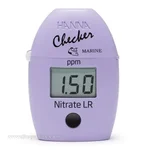
A sensor came out from ams (AS7343) in 2022 that unfortunately has been made EOL, but has a replacement (TCS34488M) with a similar package that might work for future versions.
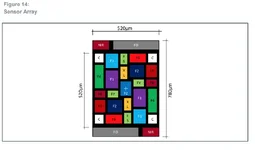
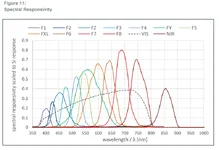
I recently got my hands on a qwic version of the AS7343 sensor from sparkfun, and figured its time to put together something.
Goals:
I figure I'll need 2 light sources (warm white, and IR for reading the phosphate test), but can use the same sensor array across most tests. I can use a small-form ESP32 as the MCU to give it USB-C power, wifi/bt connectivity if needed, and keep it small. Small/cheap ~1.3" OLED screen for displaying results/selecting tests.
Enclosure will be 3d printed.
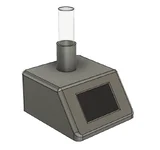
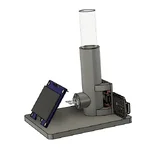
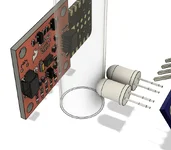
First pass at a sketch - I might drop the screen if I can give the device a web interface though, which will make the device even smaller/cheaper, reduces the need for physical buttons on the unit, and a 2nd pcb entirely. Also not sure if it will need a cover for the top of the vial, or how much ambient light will affect the reads. TBD. Will order some XIAO ESP32S3 to play with and see how far I can take it.
I'll log progress here, and am very open to suggestions and ideas. If successful, I'll release the files so it can be easily replicated.
This is something I've been wanting to do for years, and I think I finally found a sensor that will work. I've always had trouble reading the API tests, and I've always been miffed that the reefers get the cool digital test readers - and wanted to take a crack at building one that could potentially read any freshwater test given a blank/known concentration as a calibration.
A sensor came out from ams (AS7343) in 2022 that unfortunately has been made EOL, but has a replacement (TCS34488M) with a similar package that might work for future versions.
I recently got my hands on a qwic version of the AS7343 sensor from sparkfun, and figured its time to put together something.
Goals:
- As cheap as possible
- Universal as possible
- Fit API glass/plastic vials (not sure yet if the plastic vials will read ok)
- Start with Nitrate/Phosphate and see if I can add more there
I figure I'll need 2 light sources (warm white, and IR for reading the phosphate test), but can use the same sensor array across most tests. I can use a small-form ESP32 as the MCU to give it USB-C power, wifi/bt connectivity if needed, and keep it small. Small/cheap ~1.3" OLED screen for displaying results/selecting tests.
Enclosure will be 3d printed.
First pass at a sketch - I might drop the screen if I can give the device a web interface though, which will make the device even smaller/cheaper, reduces the need for physical buttons on the unit, and a 2nd pcb entirely. Also not sure if it will need a cover for the top of the vial, or how much ambient light will affect the reads. TBD. Will order some XIAO ESP32S3 to play with and see how far I can take it.
I'll log progress here, and am very open to suggestions and ideas. If successful, I'll release the files so it can be easily replicated.
16 Replies
·
319 views


Journal 22 gallon long bookshelf
Time to start a new thread.
I’ll fill in some details later, but I’m working on the hardscape now. Any and all criticism is appreciated. The vision is nothing more, and nothing less, than something appealing to the eye.
90cm x 30cm x 30cm Lifegard Aquatics ultra clear bookshelf tank. Buce and anubias on the hardscape, stems towards the back and center, mid to front carpet with some changes in shade and texture down to a flat grade on the right side of the tank.
Lily pipe inlet and skimmer will be in the back left corner with the outflow in the front left to hopefully achieve circular flow. I’ll be running an in-line diffuser. Light will be the P600 Pro that I regrettably did not upside to 900. Oh well. I’ll mount it high and hopefully it’ll have enough spread.
I have some dragon stone and red lava rock rubble I’ll use at the base to blend into the substrate, as well as some stratum I may or may not cap with.


I’ll fill in some details later, but I’m working on the hardscape now. Any and all criticism is appreciated. The vision is nothing more, and nothing less, than something appealing to the eye.
90cm x 30cm x 30cm Lifegard Aquatics ultra clear bookshelf tank. Buce and anubias on the hardscape, stems towards the back and center, mid to front carpet with some changes in shade and texture down to a flat grade on the right side of the tank.
Lily pipe inlet and skimmer will be in the back left corner with the outflow in the front left to hopefully achieve circular flow. I’ll be running an in-line diffuser. Light will be the P600 Pro that I regrettably did not upside to 900. Oh well. I’ll mount it high and hopefully it’ll have enough spread.
I have some dragon stone and red lava rock rubble I’ll use at the base to blend into the substrate, as well as some stratum I may or may not cap with.
228 Replies
·
24744 views
Staff member
I Donated 2026
Founding Member
This is the future home for the announcements when someone obtains an achievement badge. Let the games begin!
1981 Replies
·
48124 views

Title 
0 Replies
·
23 views