Welcome to ScapeCrunch

We are ScapeCrunch, the place where planted aquarium hobbyists come to build relationships and support each other. When you're tired of doom scrolling, you've found your home here.

Help With Growing Emersed

  • Thread starter Thread starter BenB
  • Start date Start date
  • Tagged users Tagged users None
Joined
Nov 1, 2022
Messages
884
Reaction score
1,299
Location
Raleigh, NC US
I've been trying to grow some plants emersed and they aren't doing so great.
I need to take a pic, but my biggest plant keeps getting yellow tips and then getting set back.
I'm thinking maybe my substrate is too rich. I have it in 50:50 Control Soil and APT Feast. I'm wondering if the plants aren't getting fried in ammonia.
What do you think and what do you recommend that I can switch to?
 
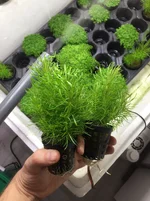
Hi BenB, I don't have clear knowledge about the problems experienced with soil or similar media, but if you're going to grow them emersed, I recommend hydroponics. You can start with DWC and if you see positive results and enjoy it, you can very easily grow all non-native aquatic species with a simple EBB&FLOW setup. Also, side note: when acclimatized, these plants don't need the very high humidity levels that are conveyed on the internet (most of them). This makes the system easier, more sustainable, and more effective against fungal diseases. I'm sharing a few photos from my own journey with you.

First setup, crawling steps... (This was DWC)
IMG_6812.webpIMG_6906.webp


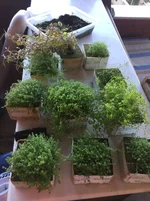
Second setup (EBB&FLOW), there was nutrient solution and head pump in the bucket.

IMG_7238.webpIMG_7254.webpIMG_7396.webpIMG_7429.webp

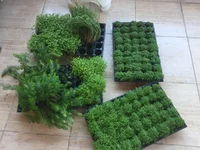
This is my first true EBB&FLOW setup it was 1x1m.
IMG_7439.webpIMG_7713.webpIMG_7714.webpIMG_7803.webpIMG_7807.webp
IMG_7811.webpIMG_7817.webpIMG_7881.webp
IMG_8007.webp

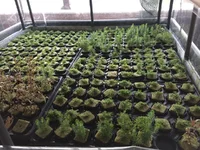
And then, I built an 18m2 (5th floor) greenhouse on the terrace of my house. I've created a album for you that might be helpful.

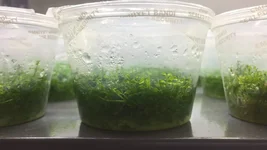
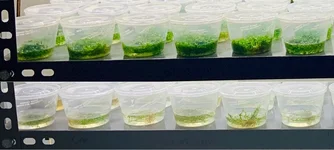
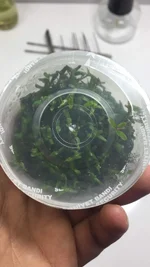
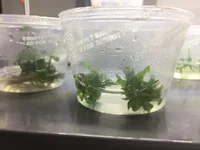
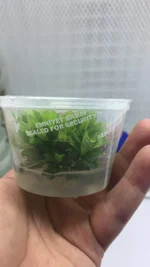
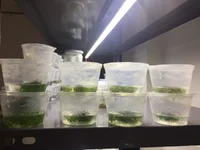
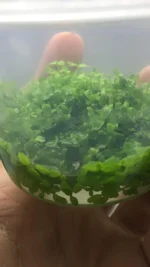
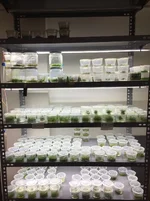
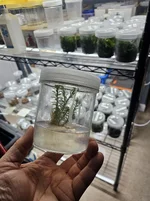
But honestly, growing them in vitro was the most enjoyable thing that I have had. I can also help with that if you think of going with this option. I can share some photos of growing them in vitro at home if you want, and can share what I know about it. There isn't much information about it.

CD7CD393-E228-44C8-8AF7-FCEC1A0CF14B.webp

IMG_2714.webp
 

Attachments

  • IMG_7807.webp
    IMG_7807.webp
    179.6 KB · Views: 2
Your emersed set up is awesome. I'm just trying to grow a handful of plants though. Maybe a dozen. Hoping to find more of a small set-up solution.

As far as the tissue culture, I am actually familiar with that. I tissue culture orchids. I've done aquatic plants, but only moved some that were already sterile and in culture over into fresh media to try to make few extra plants. I haven't gotten it to work so great. Anubias grow so slowly, Echinodorus stay tiny, and other plants struggle. I'd be interested to know what media you use and any tips you have, especially with the Anubias and other stem plants. I've just been using MS media and adding sugar.

Attached a pic of an orchid in media for fun,

1767299612667.webp
 
Hi BenB, I don't have clear knowledge about the problems experienced with soil or similar media, but if you're going to grow them emersed, I recommend hydroponics. You can start with DWC and if you see positive results and enjoy it, you can very easily grow all non-native aquatic species with a simple EBB&FLOW setup. Also, side note: when acclimatized, these plants don't need the very high humidity levels that are conveyed on the internet (most of them). This makes the system easier, more sustainable, and more effective against fungal diseases. I'm sharing a few photos from my own journey with you.

First setup, crawling steps... (This was DWC)
View attachment 12701View attachment 12702


Second setup (EBB&FLOW), there was nutrient solution and head pump in the bucket.

View attachment 12703View attachment 12704View attachment 12705View attachment 12706

This is my first true EBB&FLOW setup it was 1x1m.
View attachment 12707View attachment 12708View attachment 12709View attachment 12710View attachment 12711
View attachment 12713View attachment 12714View attachment 12715
View attachment 12716

And then, I built an 18m2 (5th floor) greenhouse on the terrace of my house. I've created a album for you that might be helpful.

But honestly, growing them in vitro was the most enjoyable thing that I have had. I can also help with that if you think of going with this option. I can share some photos of growing them in vitro at home if you want, and can share what I know about it. There isn't much information about it.

View attachment 12773

View attachment 12772
Are you sure this isn't the back lot at Tropica headquarters? ;)
 
Your emersed set up is awesome. I'm just trying to grow a handful of plants though. Maybe a dozen. Hoping to find more of a small set-up solution.

As far as the tissue culture, I am actually familiar with that. I tissue culture orchids. I've done aquatic plants, but only moved some that were already sterile and in culture over into fresh media to try to make few extra plants. I haven't gotten it to work so great. Anubias grow so slowly, Echinodorus stay tiny, and other plants struggle. I'd be interested to know what media you use and any tips you have, especially with the Anubias and other stem plants. I've just been using MS media and adding sugar.

Attached a pic of an orchid in media for fun,

View attachment 12822
Looks great! Good job!:love:

I don't have access to my media formulations - they were all written on paper on the desk at the time, and that paper is 3000km away from me. But when I return to my country for vacation again, I can grab this notebook and share it.

My top secret formulas was there 😄

ACE065D8-7392-4ABE-9BA0-76C9F97973C1.webp

As you know, unless you're lucky, growing aquatic plants 1:1 in an in-vitro environment isn't really possible. I didn't work on in-vitro for a very long time. The challenges of doing it at home - maintaining a sterile environment (especially for media preparation, etc.) - are quite demanding.

Media => Murashige & Skoog medium including vitamins | Duchefa Biochemie

My reason for getting into in-vitro production was that I needed mother plants for the plants I was growing in the greenhouse. It's not always possible to continuously prune and propagate every species growing in the greenhouse depending on the season, because different species start flowering after showing growth during different seasonal transitions. For example, Rotala species start flowering in summer, while Pogostemon species start flowering as temperatures drop and daylight hours decrease. Therefore, for situations like these, you need to have in-vitro mother plants so you can replant.

Additionally, due to some other problems with greenhouse cultivation, in-vitro mother plants are absolutely essential to this production process. Because from time to time you need to reset the greenhouse and do a thorough cleaning - otherwise there's no other way to get rid of formations like cyanobacteria, fungus/mold. The combination of reasons like these pushed me toward in-vitro production, and to this day it has been the most enjoyable growing method - the reward for the effort is great. :)

As you also know, the harder part of this work than growing the plant is obtaining a sterile mother plant, and this is a process that takes a very serious amount of time. In a relatively short period, I was able to achieve success with these species by partially using PPM (Plant Preservative Mixture) (both in media and sterilization stages).


Species I managed to propagate (more accurately, species I could propagate because I was able to achieve sterilization):
  • Hemianthus Callitrichoides Cuba
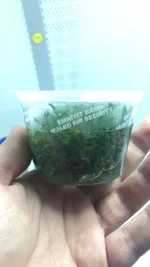
    058E3F34-8006-483C-A4B1-3C6C8EFB2A66.webp705801B8-372C-49FB-B241-4AAD225A598E.webpBF029357-0DC6-40D4-BC4B-2F69E22567BC.webpIMG_0223.webpIMG_2703.webp4DDA656B-4D84-4CF1-84B0-ABD74F77D77C.webp
  • Rotala H'ra
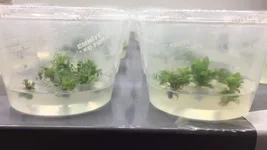
    IMG_1973.webpIMG_2074.webp5CB64194-5C03-4B4C-91B1-79CB58EE7865.webpIMG_1957.webpIMG_1935.webpIMG_2711.webpIMG_2813.webpIMG_2812.webp363FEE72-AA89-4931-8E3E-B1EFAB30F683.webp08F40A69-CC78-491A-BD2D-99FF70D5CA3E.webp26AF1274-653D-4D0B-A706-1D6A78F9868A.webpIMG_1824.webp
  • Echinodorus Tenellus (Helianthum Tenellum)
    IMG_2106.webpEB8F613B-8B0B-4C72-987E-BC068AD49C75.webpIMG_2674.webpIMG_2684.webpE4BCE722-036D-4B2F-94D4-F5262AD5297A.webp1C091A96-214F-42C9-BE9C-E20087BAB01D.webpBC98E46F-5B34-42BF-A264-38C4C7DB551F.webp
  • Staurogyne Repens
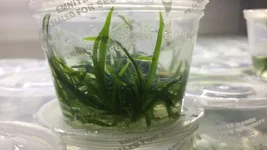
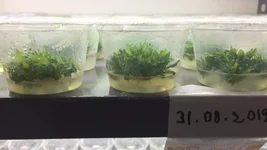
    IMG_2194.webpIMG_2195.webpE60E8594-04CF-4208-ADD6-9D9466C06A59.webpIMG_2274.webp09D8C3E6-270D-46E3-AB68-CFFA298BE061.webp09D8C3E6-270D-46E3-AB68-CFFA298BE061.webp2360CDDC-23E0-4E40-AF55-AA1C441E16FE.webp6C567B9B-E5D0-450B-9DAA-C9086BAB8965.webpC3AA864F-09FF-43ED-A433-BCE211945E4D.webpFD2DEB7B-4841-417C-9EF1-D9F574C80A2C.webpIMG_2634.webp3D90108E-DA14-4BA8-916E-12DE898CE6A7.webp7F1F2635-B9E2-42A4-8EBE-9B2888F1BD6E.webpIMG_2675.webpIMG_2683.webp9606B394-493C-46E3-8548-C4E06156A0D1.webpE41644C3-F0C5-4124-AFBB-53BBA5D2C95B.webpC13CD830-4AAA-467C-9F88-32B6723F4E79.webp1120FC5E-1534-471C-9241-A2B822B707AA.webpIMG_3087.webpFAF39AB4-43D2-4D88-A194-6AF186F3EA98.webp48C513EB-D04E-4B39-9DEB-E2571BEBE266.webpIMG_3116.webpIMG_3124.webpIMG_3153.webpIMG_3250.webp
  • Ludwigia mini super red (Ludwigia palustris red)
    E9BD3E85-BED1-4B8E-941E-7324B038E652.webpIMG_2275.webpIMG_2497.webpIMG_2706.webp
  • Micranthemum Monte Carlo
    IMG_2108.webpIMG_2628.webpIMG_2677.webpIMG_2681.webpIMG_2682.webpIMG_2698.webpIMG_2699.webpIMG_2715.webpIMG_2716.webpIMG_2717.webpIMG_2718.webp77B8DE89-0D4B-45F6-8BAF-1B2941960156.webpC6BAC15D-9DFA-4D13-98F1-D46C1E8201A8.webp
  • Eleocharis Acicularis Mini (pusilla)
    IMG_2647.webpIMG_2648.webp7A8856C7-9582-4B2B-98EF-F9A0490DCC0B.webpEDE7F896-FCD1-47E1-A246-878523C38FDD.webpFDCC5DD8-E92A-4DCB-92AF-3BD4EEC4656D.webpB14DCF31-5F33-4FD4-B38A-CBE14F49FFD8.webp046A7655-1E35-4E6A-BCC3-FD69DFD519BC.webpE7C2F5B5-0862-48B2-8D5E-4411D11B3E94.webp
From this list, the ones I could produce stably without issues through subcultures:
  • Staurogyne Repens
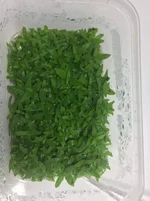
  • Hemianthus Callitrichoides Cuba
  • Eleocharis acicularis mini
All of the above species were grown in 1/2 concentration MS media. Sugar ratios were between 20-30g/L, and the culture media contained 1ml/L PPM. Also, I achieved the fastest growth in all plants in liquid media. When using agar agar, S. repens generally showed good development with agar-based media too, but it was much faster in liquid media.

Monte Carlo was the plant I tried the most to propagate, but despite trying this plant with many different nutrient concentrations and different sugar media types, I couldn't succeed (maybe the problem was using PPM! I don't know). I would observe growth in the first week, and it was in quite good form. But afterward, despite not seeing phenolic exudation or contamination, the plant would dissolve and disappear. I experienced a similar problem with Hemianthus micranthemoides.

Apart from these, there's no need for hormones like BAP. I obtained BAP and tried propagating Rotala H'ra this way - as you can see in the photos, it produced incredibly hundreds of new shoots. But the problem is that in media without BAP, it was producing sufficient shoots "for my greenhouse production needs." It might be necessary for callus culture, etc., but that's also a difficult path to work with, at least for a home environment and for an amateur like me. So I didn't use BAP or any similar stimulator for the plants I propagated.

Now I remembered while looking at old photos to add to the topic. I was using BAP at a very low concentration for S. repens. If I remember correctly, 0.1mg/L - this encouraged it to continuously produce new side shoots instead of callus formation, and as you can see from the photos, I was getting good results. However, I'm not entirely sure about the ratio - I'm talking about 2019, and it's not really possible for me to give exact ratios without accessing the notebook I mentioned. I've forgotten many things.
 
Holy cow that is beyond impressive! I would love to see a journal of your emersed journey.

What an impressive setup! 👏🏼
Are you sure this isn't the back lot at Tropica headquarters? ;)

It's a pleasure to hear these things, thank you very much. 🫶

So do you guys have laminar flow hoods at home or what?
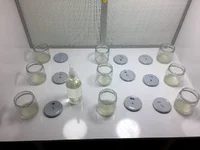
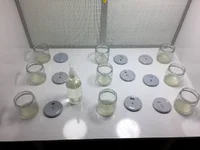
I started by first breaking down my 60x40x40 aquarium. I tried to turn it into a sterile box by laying it on its side. I was using a UV lamp and IPA for internal sterilization, but I couldn't achieve very successful results. Working in this kind of environment is very difficult, and the results push you more toward quitting this work altogether rather than making improvements. When I did some research, I saw that it was possible to make an LFH at home, and I built one myself. This directly affected the results I was getting.
EA847CE2-B211-4F3B-9346-5460BC6B9CDB.webpIMG_2524.webp1C0B3045-BEDB-42A8-8228-12D531E2EE10.webp4440B1BA-99E3-4BC1-92EB-AECBD7C13C8A.webp9F709C90-42D6-477B-9488-B348F461A8E6.webp674203CE-E6E5-432C-84DF-4497411299A3.webpC40E9426-4D45-4405-827D-C99608F12AC0.webpB4DED3C9-E616-4562-9CEC-C9E3017FC538.webpIMG_2563.webpIMG_2564.webpIMG_2565.webp
 

Attachments

  • IMG_2563.webp
    IMG_2563.webp
    79.5 KB · Views: 1
Y'all are nuts! A big chunk of my master's work was TC based, but I can't imagine having all the equipment at home. I do joke with my husband that we should get an autoclave for the basement.

@BenB I would google scientific research papers to see what media recipes have been tried - I did a quick search for anubias and there are several. (Or wait for @Emrah.) Said you were using MS and sugar, so no PGRs at all? That might make all the difference, and/or there could be some other nonstandard additive that is especially loved by one of your target species that would help.
 
Y'all are nuts! A big chunk of my master's work was TC based, but I can't imagine having all the equipment at home. I do joke with my husband that we should get an autoclave for the basement.

@BenB I would google scientific research papers to see what media recipes have been tried - I did a quick search for anubias and there are several. (Or wait for @Emrah.) Said you were using MS and sugar, so no PGRs at all? That might make all the difference, and/or there could be some other nonstandard additive that is especially loved by one of your target species that would help.

Yes, there are some studies focused on plants like Anubias where tissue culture propagation is more important, but as far as I remember, all of them were aimed at callus formation. Since Anubias doesn't undergo multiplication this way anyway, there's not much point in producing it in an in vitro environment. The sources below can be used as references if they haven't been read yet. But I can say definitively that for many fast-growing species like Cuba, Monte Carlo, and Parvula mini, using PGRs doesn't do much beyond complicating things. First of all, finding the right type and concentration of PGR requires separate effort, and there's also the financial aspect to consider. Compared to greenhouse production, it requires far more R&D, and the process until finding the right culture medium formula is very time consuming.

Establishment of the In Vitro Culture and Plant Regeneration of Anubias barteri var. nana 'Mini'
https://www.researchgate.net/public...stem_node_explant_of_Anubias_barteri_var_Nana
https://www.researchgate.net/publication/277309390_In_vitro_high_frequency_regeneration_through_apical_shoot_proliferation_of_Hemianthus_callitrichoides_'Cuba'_-_a_multipurpose_ornamental_aquatic_plant
 
Yes, there are some studies focused on plants like Anubias where tissue culture propagation is more important, but as far as I remember, all of them were aimed at callus formation. Since Anubias doesn't undergo multiplication this way anyway, there's not much point in producing it in an in vitro environment. The sources below can be used as references if they haven't been read yet.
But I can say definitively that for many fast-growing species like Cuba, Monte Carlo, and Parvula mini, using PGRs doesn't do much beyond complicating things. First of all, finding the right type and concentration of PGR requires separate effort, and there's also the financial aspect to consider. Compared to greenhouse production, it requires far more R&D, and the process until finding the right culture medium formula is very time consuming.

Establishment of the In Vitro Culture and Plant Regeneration of Anubias barteri var. nana 'Mini'
https://www.researchgate.net/public...stem_node_explant_of_Anubias_barteri_var_Nana
https://www.researchgate.net/publication/277309390_In_vitro_high_frequency_regeneration_through_apical_shoot_proliferation_of_Hemianthus_callitrichoides_'Cuba'_-_a_multipurpose_ornamental_aquatic_plant

Yeah, I absolutely believe that fast growing plants don't need PGRs, but if slower growing species are just sitting there they may benefit from a kick in the pants. I have done media optimization studies and they are definitely a lot of work and I had a lot of expert guidance to draw from. If someone else has already looked into it, there's no point in reinventing the wheel, especially as a hobbyist where "good enough" is sufficient. Cost efficiency is of course an important consideration, but honestly above my pay grade.
 
I often wonder if part of the problem with TC of aquatic plants is that they have such a huge percentage of water and our medias don't supply enough. However, the plants we are growing are equivalent to emersed, so the water % might be lower, and I'm incorrect in my thought.

I don't have access to my media formulations - they were all written on paper on the desk at the time, and that paper is 3000km away from me. But when I return to my country for vacation again, I can grab this notebook and share it.
You need to take pictures of your recipes or scan them into some sort of storage like Dropbox. I'd hate for you to lose it from some mishap.

My top secret formulas was there 😄

View attachment 12830
THIS was the media I used on the latest ones I did. I didn't have to add sugar to these, but they sort of grew... meh
This company used to have a branch in Europe. Kind of expensive, but nice to be able to get everything pre-made. Just add water and cook.

As you know, unless you're lucky, growing aquatic plants 1:1 in an in-vitro environment isn't really possible. I didn't work on in-vitro for a very long time. The challenges of doing it at home - maintaining a sterile environment (especially for media preparation, etc.) - are quite demanding.
I cook my flasks in a pressure cooker. I rarely have anything contaminate. I've made thousands of orchid flasks with no issues. I find plastic is more difficult to keep sterile over the long term.

Yeah, similar to what I used.

As you also know, the harder part of this work than growing the plant is obtaining a sterile mother plant,
Oh.. skip that. Buy a tissue culture cup from Tropica and just transplant the already sterile stuff. 😆
A friend went to the Tropica lab. They were able to sterilize all that delicate stuff with mercuric chloride gas. Something you and I wouldn't be able to touch. :oops:

Here are pics of a couple things that I have remaining that I tried to do.
This is Tonina fluviatilis. I did these in Jan of 2025. So growth wasn't spectacular. This is what has been limiting for me. I don't need the plants. I was just having fun with it.
1767402432547.webp

This is Anubias nana petite that I put into orchid media just for shits and giggles. This has been in here since 2020. Anubias grows so slow.
It is regular Anubias and not the white kind. It is faded because it is so old and barely alive.
1767402515047.webp
 
Y'all are nuts! A big chunk of my master's work was TC based, but I can't imagine having all the equipment at home. I do joke with my husband that we should get an autoclave for the basement.
Believe it or not, the lab equipment (laminar flow hood and pressure cooker) isn't as bad as the other stuff. If you put a little effort into it, you can find a hood for not too expensive from some hospital surplus or university sale. I lucked up and someone in Asheville was selling mine. I got a 4' hood for $125. Cost more to go get it and transport it.

What is so expensive are the flasks and tools. It takes so much. I use a label maker, and Ive spend more on ribbon than my hood cost. When you start doing this stuff, orchids at least, it takes hundreds of flasks at a few $ each.
@BenB I would google scientific research papers to see what media recipes have been tried - I did a quick search for anubias and there are several. (Or wait for @Emrah.) Said you were using MS and sugar, so no PGRs at all? That might make all the difference, and/or there could be some other nonstandard additive that is especially loved by one of your target species that would help.
I have some stuff. I can get it to grow, I just feel like it should grow better when it is in a sterile environment with no pathogens and all the nutrients it needs. Two AGA conventions in a row, we had tc workshops. It was fun. The head of the tc lab at the U of Florida taught them. He sent me a couple papers on Anubias, but they were a bit confusing for me. I'm not even sure if I still have them. All the media is MS based. It might be that I have unrealistic expectations. Also, I'm not really putting much effort into it. I've been mostly playing around. Example: See above where I grew Anubias in orchid media.
 
This is an old pic of some of my orchid stuff.
I did it in my basement in my old house and rarely had contamination.
Again, aquarium plants are easy to manipulate by comparison. I need to look more into the appropriate medias for growing stem vs woody plants like Anubias, but the motivation just isn't there really. Why should I go through the trouble and effort when I can easily go online and have a cup of whatever in my mailbox within a few days?

1767403554878.webp
 

Attachments

  • 1767403521004.webp
    1767403521004.webp
    121.2 KB · Views: 1
Might be a bit late.

I've found coco coir to be an ideal growing medium just due to how well it aerates but stays moist. Wicks water so moister is always even, also extremely soft and easy to plant on.

You can just double stack your cups to make the holes smaller so less media leaks out.

Fertilizer choice is just maxigrow from general hydroponic in a 1 gallon watering bottle. I water the coco coir cups once per day and empty the container of reservoir water once per week.
 
Might be a bit late.
Definitely not too late. While this thread has had some awesome discussion, I still don't have any good recommendations (that I remember) for just a tiny emersed set up.

I've found coco coir to be an ideal growing medium just due to how well it aerates but stays moist. Wicks water so moister is always even, also extremely soft and easy to plant on.
This is good because thanks to @gnatster I happen to have a good bit. I got interested in doing a Wabi Kusa, until the AGA relased their contest results, and I bought a bunch to do that. Nate recommended a video and I was going to do it that way. After looking at the AGA though, I might as well be pissing in the wind. So I can use it to grow emersed maybe.

Fertilizer choice is just maxigrow from general hydroponic in a 1 gallon watering bottle. I water the coco coir cups once per day and empty the container of reservoir water once per week.
I've been watering the little cup I have with tank water. It should have all the nutrients I need. I usually get a cup out right after a water change when the nutrient levels are at their highest.

Thanks for the suggestions!
 
Last edited:
I'm been watering the little cup I have with tank water. It should have all the nutrients I need. I usually get a cup out right after a water change when the nutrient levels are at their highest.

Thanks for the suggestions!
I suggest just buying maxigrow, it's a dry fert for like $15 on amazon. 1 bag will probably last you forever.
The normal TDS of the water you will be watering the coco coir with is easy 500-600tds starting from 0. It's a lot of nutrients including lots of ammonia, which is why it grows plants so well/fast. I've done the tank water etc route before, it's just not enough nutrients for emersed set-up.

This is all assuming your coco coir is in a pot or has drainage, so you can dump out reservoir water to avoid drowning the roots.
 
Been a busy few weeks. Coming back to this.

This is all assuming your coco coir is in a pot or has drainage, so you can dump out reservoir water to avoid drowning the roots.
Wait what? Maybe this is my problem. I'm just growing them in a cup. They normally grow under water. Why do I need to worry about the roots drowning and need drainage for plants that normally growing under water or where often only the top bit is emersed and the rest is under water.?
 
Been a busy few weeks. Coming back to this.


Wait what? Maybe this is my problem. I'm just growing them in a cup. They normally grow under water. Why do I need to worry about the roots drowning and need drainage for plants that normally growing under water or where often only the top bit is emersed and the rest is under water.?
Oh my bad, I thought you were growing them in like those cups that potted aquarium plants come in, and instead of rockwool you got coco coir.
What you're doing works too, I just pictured your set-up differently.
 

Top 10 Trending Threads

Back
Top