

Hi All,
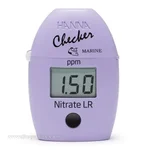
This is something I've been wanting to do for years, and I think I finally found a sensor that will work. I've always had trouble reading the API tests, and I've always been miffed that the reefers get the cool digital test readers - and wanted to take a crack at building one that could potentially read any freshwater test given a blank/known concentration as a calibration.
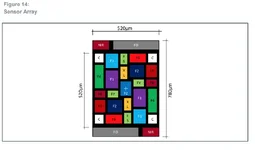
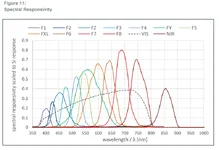
A sensor came out from ams (AS7343) in 2022 that unfortunately has been made EOL, but has a replacement (TCS34488M) with a similar package that might work for future versions.
I recently got my hands on a qwic version of the AS7343 sensor from sparkfun, and figured its time to put together something.
Goals:
I figure I'll need 2 light sources (warm white, and IR for reading the phosphate test), but can use the same sensor array across most tests. I can use a small-form ESP32 as the MCU to give it USB-C power, wifi/bt connectivity if needed, and keep it small. Small/cheap ~1.3" OLED screen for displaying results/selecting tests.
Enclosure will be 3d printed.
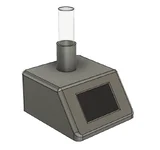
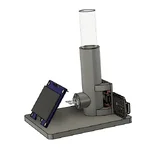
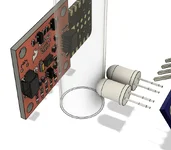
First pass at a sketch - I might drop the screen if I can give the device a web interface though, which will make the device even smaller/cheaper, reduces the need for physical buttons on the unit, and a 2nd pcb entirely. Also not sure if it will need a cover for the top of the vial, or how much ambient light will affect the reads. TBD. Will order some XIAO ESP32S3 to play with and see how far I can take it.
I'll log progress here, and am very open to suggestions and ideas. If successful, I'll release the files so it can be easily replicated.
This is something I've been wanting to do for years, and I think I finally found a sensor that will work. I've always had trouble reading the API tests, and I've always been miffed that the reefers get the cool digital test readers - and wanted to take a crack at building one that could potentially read any freshwater test given a blank/known concentration as a calibration.
A sensor came out from ams (AS7343) in 2022 that unfortunately has been made EOL, but has a replacement (TCS34488M) with a similar package that might work for future versions.
I recently got my hands on a qwic version of the AS7343 sensor from sparkfun, and figured its time to put together something.
Goals:
- As cheap as possible
- Universal as possible
- Fit API glass/plastic vials (not sure yet if the plastic vials will read ok)
- Start with Nitrate/Phosphate and see if I can add more there
I figure I'll need 2 light sources (warm white, and IR for reading the phosphate test), but can use the same sensor array across most tests. I can use a small-form ESP32 as the MCU to give it USB-C power, wifi/bt connectivity if needed, and keep it small. Small/cheap ~1.3" OLED screen for displaying results/selecting tests.
Enclosure will be 3d printed.
First pass at a sketch - I might drop the screen if I can give the device a web interface though, which will make the device even smaller/cheaper, reduces the need for physical buttons on the unit, and a 2nd pcb entirely. Also not sure if it will need a cover for the top of the vial, or how much ambient light will affect the reads. TBD. Will order some XIAO ESP32S3 to play with and see how far I can take it.
I'll log progress here, and am very open to suggestions and ideas. If successful, I'll release the files so it can be easily replicated.