Dennis Wong
Active Member





*Liebig's law of the minimum, often simply called Liebig's law or the law of the minimum, is a principle developed in agricultural science by Carl Sprengel (1840) and later popularized by Justus von Liebig. It states that growth is dictated not by total resources available, but by the scarcest resource (limiting factor). The law has also been applied to biological populations and ecosystem models for factors such as sunlight or mineral nutrients. (wiki)
If Liebig's law was true in the strict sense, plants would grow uniformly according to the minimum available resource, and no deficiencies would exist - the fact deficiencies do exist means that plants can grow lacking certain resources by producing flawed/different growth forms. I do think that Liebig's law works in the general sense but plant growth is also affected by hormones and other adaptations.
I think plants also grow with momentum so to say.
Everyone who has run CO2 has seen what happens when it is stopped suddenly. I've seen even water wisteria get algae from CO2 stoppages. Plants like growing at a consistent speed in the short run and dislike sharp disruptions to growth parameters. However, most plants are very adaptable/flexible to a wider range of growth parameters in the long run, but the changes need to be gradual. A poor understanding of this concept has lead many folks to claim that certain plants need XXX to grow well, and that every time XXX drops below a certain level in their tank the plant fails. However, this can easily be due to it being a sharp short term disruption to growth, where as if XXX levels were adjusted slowly, the requirement for XXX could change.
The classic signs of growth momentum being interrupted - plant stress, algae, stunted tips, uneven growth. Many "nutrient deficiency" signs are due to changing/dip in growth momentum - the same plants may adjust to downward nutrient availability given time.
Things that can change tank growth momentum (negatively):
- CO2 stoppages (but not upward spikes it seems?)
- Nutrients level dips
- Nutrient level up spikes (less experienced folks don't realize this)
- Trimming (some species are more resilient than others)
- Replanting/disturbance of substrate zone (especially for substrate fed plants)
- Temperature spikes
- Microbial imbalance ??? (I haven't trashed enough tanks to isolate this)

High growth momentum vs slow growth momentum environments
High growth speed tanks
- Utilize high growth speed, and plant mass to outgrow problems
- Fast feedback, if you do something wrong the signal comes quickly
- However, vulnerable to dips in growth parameters (nutrients, especially CO2)
- Many such tanks end up with overcrowding and aquarist not being able to keep up with overcrowding
- Algae problems can reach escape velocity, making it difficult for less experienced folks to handle
- Seen in Dutch/Plant Collector tanks, tanks that use many fast growers, stem plants

Slow growth speed tanks
- Need to choose which is the limiting factor; CO2? Light? nutrients?
- Plants can become delicate if grown in lean conditions long term, making them vulnerable to even small spikes, easily tipped over
- More reaction time for hobbyists. However, slower feedback loop compared to high growth speed tanks can slow learning.
- Slow plant feedback leaves aquarist wondering if he is doing the right thing
- Excludes certain more demanding species
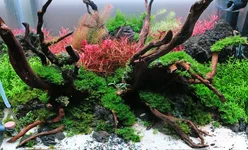
- Seen in ADA style setups, nature/Iwagumi style aquariums
Working on an article on this and would be happy to hear folk's experiences.